
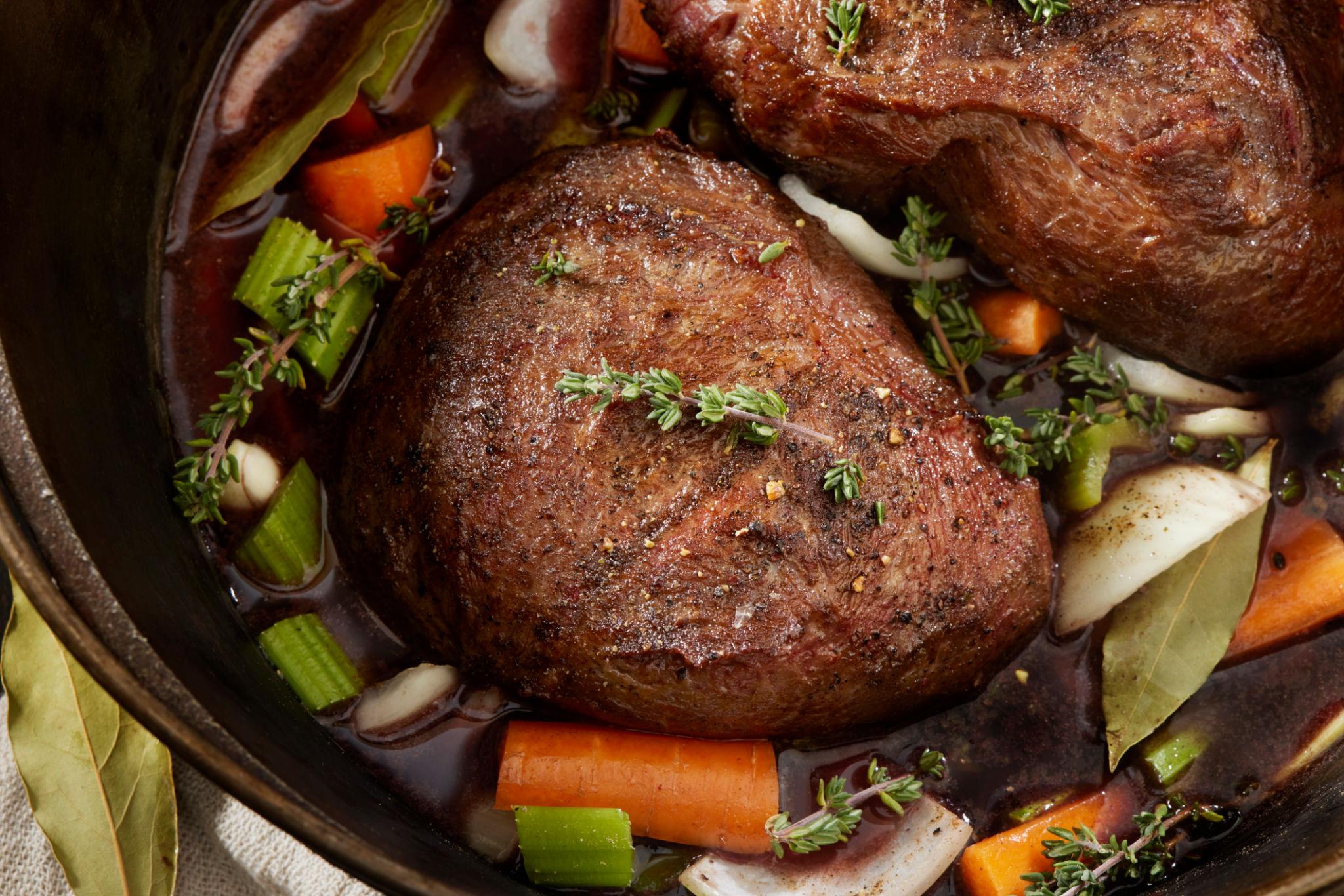
Braising: The Slow-Cooking Technique That Turns Beef Cuts into Spectacular Dishes
Beef cheeks that fall apart at the touch of a fork, oxtail with a rich, velvety sauce, meat that becomes incredibly tender after hours of cooking. The secret isn’t a complicated recipe, but one of the oldest and most effective cooking techniques: braising.
Some beef cuts need nothing more than a few minutes on the grill. Others are cuts where time is part of the recipe.
Beef cheeks, oxtail and other cuts rich in connective tissue aren’t meant for high heat and quick cooking. Instead, when cooked slowly at a moderate temperature, they can become incredibly tender and deeply flavorful.
This is where braising comes in.
What Is Braising?
Braising is a slow-cooking technique that uses moderate heat and a relatively small amount of liquid.
The meat is first browned to develop flavor, then slowly cooked in a covered pot together with liquid and aromatic ingredients.
Unlike boiling, the meat does not need to be completely submerged in liquid.
As the meat cooks slowly, heat and moisture gradually break down the connective tissue. Collagen transforms into gelatin, contributing both to the tenderness of the meat and to the rich, velvety texture of the sauce.
That’s why a cut that feels firm when raw can become so tender after a few hours of cooking that it practically falls apart at the touch of a fork.
Why Are Firmer Cuts So Well Suited to Braising?
We’re used to associating premium beef with tenderness.
But natural tenderness isn’t the only factor that determines the potential of a cut.
Muscles that are heavily used throughout the animal’s life develop more connective tissue. Cook them quickly and they can remain firm. Give them time, moderate heat and moisture, however, and that same structure becomes an advantage.
That’s why cuts such as beef cheeks and oxtail are so well suited to braising.
We’re not trying to cook them like a steak.
We’re giving them the time they need to become tender, succulent and deeply flavorful.
Braising Doesn’t Have to Mean a Complicated Recipe
Perhaps the most interesting thing about this technique is how easily you can change its character.
France: red wine + thyme + carrot + onion
Italy: tomatoes + wine + herbs → ragù
Mexico: chilli + spices + lime → taco filling
Asia: soy sauce + ginger + garlic + star anise
The same technique.
The same cut of meat.
Completely different results.
Once you understand the basic principles of braising, you don’t necessarily need a recipe for every dish. You can start creating your own combinations, experimenting with different flavors and ingredients.

