
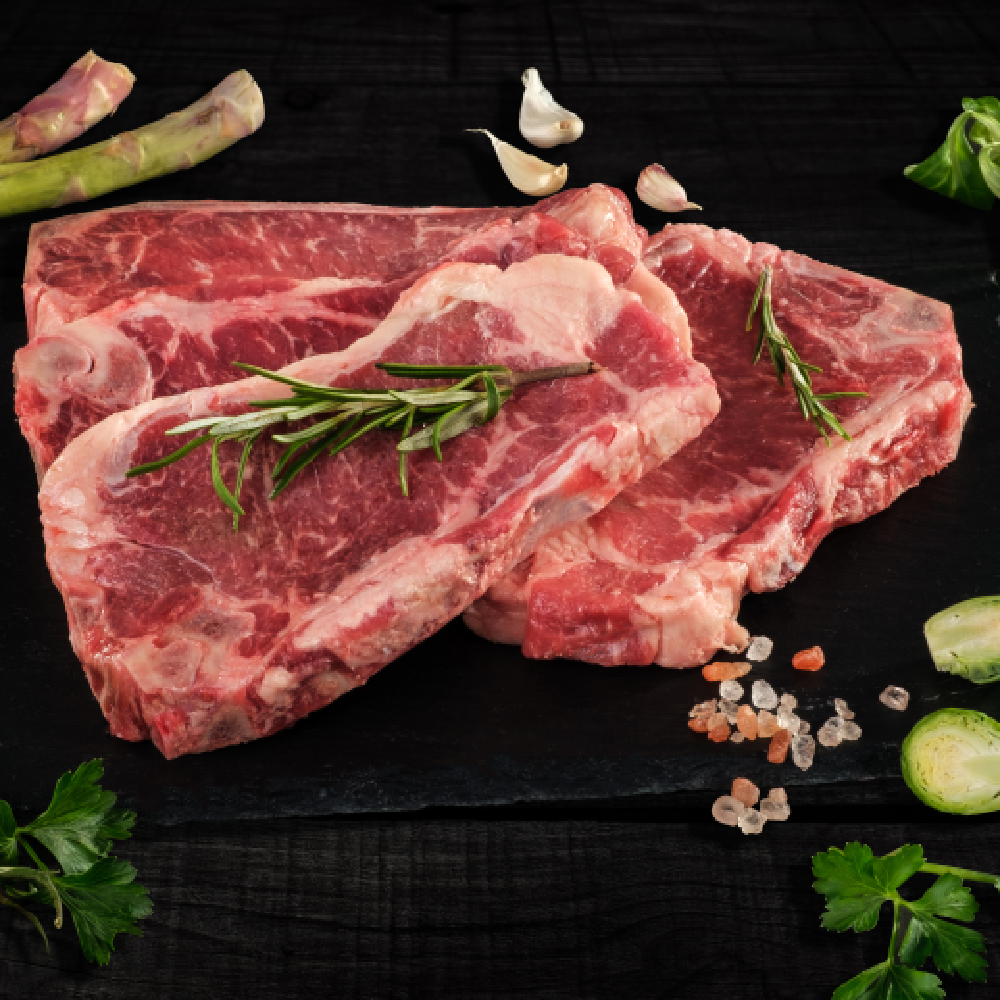
Bone-In Striploin, Ribeye or T-Bone?
Bone-In Striploin, Ribeye or T-Bone? How to Choose the Right Steak Cut
When choosing beef for a steak, the names can sometimes seem confusing. Bone-in striploin, ribeye, and T-bone offer distinctly different eating experiences.
Start with what you enjoy on the plate: the texture of the meat, the amount of fat, and the way you plan to cook it.
What is bone-in striploin?
Striploin comes from the loin section of the animal. In the bone-in version, the bone remains attached. Internationally, you may see it referred to as “bone-in striploin” or, when cut into individual steaks, “bone-in strip steak.”
It is a great choice for those who enjoy a pronounced beef flavor and a steak with a slightly firmer bite. The outer fat cap can also be beautifully browned during cooking.
How is it different from ribeye?
Ribeye comes from the rib section and typically has a more generous distribution of fat within the muscle groups. It is a popular choice for those who prefer a richer, more indulgent steak.
Striploin has a more uniform muscle structure. It can be a good choice if you prefer a compact, meaty texture and a balance between meat and fat. Marbling can, of course, vary from one cut to another.
Is it the same as a T-bone?
No. A T-bone contains two distinct cuts separated by a T-shaped bone: striploin on one side and tenderloin on the other.
A bone-in striploin does not automatically include the tenderloin section found in a T-bone. The two names therefore cannot be used interchangeably.
When should you choose bone-in striploin?
When you want a cut that works beautifully on the grill, makes an impressive presentation, or can be prepared whole and carved at the table.
The format of the cut matters: individual steaks are ideal for quick, high-heat searing, while a whole cut can be roasted in the oven or cooked on a grill using indirect heat.
Discover Premium Angus bone-in striploin and choose the cooking method that suits your meal.

