
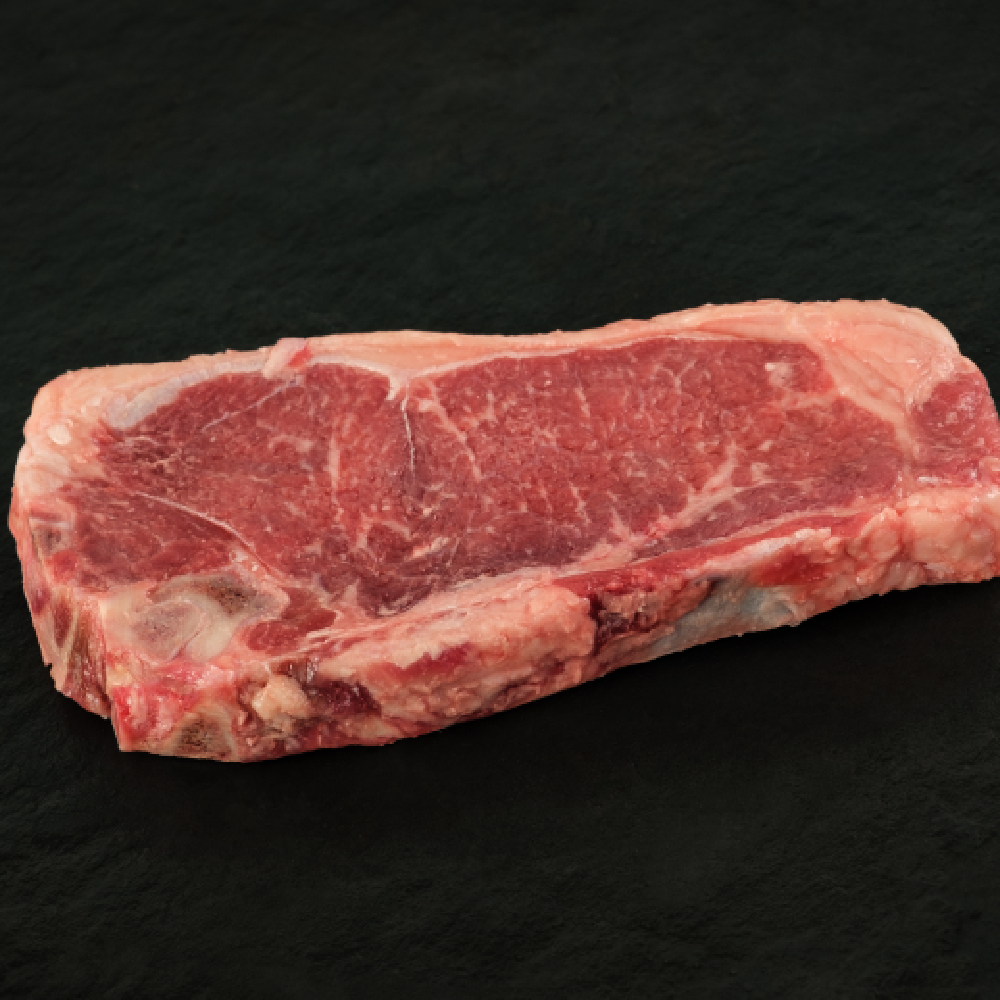
How to Cook Bone-In Striploin: Why Thickness Matters More Than the Timer
“How many minutes per side?” is one of the first questions that comes to mind when cooking a steak. With bone-in striploin, the answer depends on the thickness of the meat, the intensity of the heat, and the shape of the cut.
A thin steak and a whole bone-in striploin require very different approaches.
For a thin steak: quick cooking and attention to the center
A thin steak cooks quickly. Use a very hot grill or pan and focus on developing a good sear on both sides.
Avoid extending the cooking time simply to achieve a darker crust—the center may already be done. Pat the meat thoroughly dry before cooking to encourage better browning.
For a thick steak: use two stages
For a steak around 3–4 cm thick, start by searing it over high heat. Then finish cooking over gentler heat—on the indirect side of the grill or in the oven.
This allows the center to cook without over-browning the surface. If you’re using a pan, make sure the bone does not prevent enough of the meat from making contact with the cooking surface.
For a whole cut: moderate heat and regular checks
A whole bone-in striploin can be cooked in the oven or on a covered grill. Start with a high-heat sear, then continue cooking at a moderate temperature.
Don’t calculate cooking time based on weight alone. The shape and thickness of the cut also affect how long it takes to cook.
Where should you insert the thermometer?
Insert the thermometer into the thickest part of the meat, avoiding the bone and areas of fat. With a large cut, check the temperature in several places.
For safe cooking, aim for an internal temperature of 63°C (145°F), followed by at least 3 minutes of resting time.
Before serving
Let the meat rest, then separate it from the bone and slice it against the grain. Season with salt and pepper and serve with your favorite sides.
Choose Premium Angus bone-in striploin and adapt your cooking method to the size and thickness of the cut.

